
Author: Tasnim Tarannum (HRM Lecturer, North South University)
Table of Contents:
- Introduction
- Why Does It Matter?
- What Can Be the Solutions?
- Conclusion
Envision exploring a verdant forest, filled with lofty trees, abundant wildlife, and the harmonious hum of nature. But in the secluded areas of these woods, ranging from the Himalayan foothills to the mangroves of the Sundarbans, a silent crime is taking place. Precious timber is being illegally removed, loaded onto trucks, and transferred across borders under the cover of darkness.
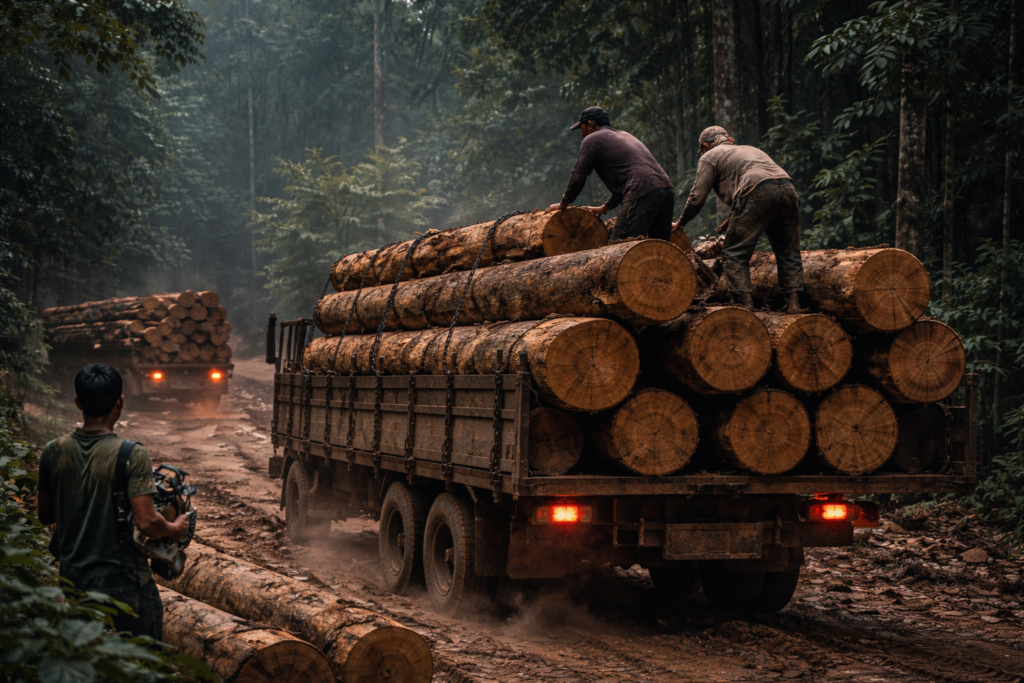
The illicit harvesting, transportation, or sale of timber, frequently done in violation of national and environmental laws, is known as wood smuggling. This multibillion-dollar prohibited market sector contributes to biodiversity loss, corruption, and deforestation. Even though illegal logging has been widespread in many susceptible areas, such as the Amazon, Africa, and South Asia, this crime is destroying our ecosystems in South Asia.
The forests of South Asia are home to countless numbers of people who rely on them for food, shelter, and fuel. They are also rich in wildlife. Approximately 70 million people globally, including many Indigenous tribes, live in forests, and over 1.6 billion people are dependent on them for food or fuel. However, timber trafficking is transforming this luscious sanctuary into desolate regions.
Countries like Bangladesh, India, Nepal, Bhutan, and Myanmar have all been affected. An unprecedented number of endangered species, including sandalwood, teak, and rosewood, are being trafficked into foreign markets with little oversight or traceability. According to the United Nations Office on Drugs and Crime (UNODC, 2013) report, illicit wood logging is driven by several factors. China, India, and other wealthy nations import a lot of wood. The market for illegal timber trade is being fuelled by the need to make profits since timber goods aren’t perceived as exotic and are frequently not forbidden for use. Other criminal markets are comparable to the trafficking of timber; this activity transcends geographical boundaries since it is well-organized and supported by strong networks.
Why does it matter?
- Forests are our lungs: Because they preserve water supplies, absorb CO2, and provide habitat for innumerable species, forests act as the respiratory system of the earth. Their role in sustaining the water cycle and supplying oxygen to living organisms is crucial. Forests aid in soil conservation and erosion prevention. Nevertheless, at least 10% of yearly carbon emissions are now caused by forest destruction.
- Biodiversity loss: Numerous plant and animal species are losing their habitats. Wildlife species are disappearing, and rare trees are being lost. More than 80% of terrestrial bodies, including 80% of amphibians, 75% of birds, and 68% of mammals, are potentially found in forests. Primates, birds, reptiles, and amphibians are among the animal species that live in forests, and their numbers have decreased by 69% on average since 1970.
- Impact on the climate: Deforestation is a major cause of greenhouse gas emissions worldwide. It has an enormous effect on soil erosion, natural catastrophes, rising sea levels, and regional climatic instability in South Asia.
- Inter-border conflicts: Illegal wood harvesting frequently feeds subterranean networks and compromises border protection.
- Local suffering: communities that depend on forests and the habitats of indigenous tribal people are devastated. In addition, they experience economic instability and lose access to resources, while criminals and business enterprises reap wealth.
What can be the solutions?
- Enhanced enforcement: Governments need to improve border security by installing checkpoints, conducting surveillance, and enforcing laws against wood smuggling. Strengthen regional collaboration to prevent cross-border wood transporting and safeguard common habitats.
- Implement policies: Reduce the exploitation of timber through establishing economic and regulatory measures into effect. Encourage and incentivize moral corporate conduct to inspire business entities.
- Strengthen Investigation: Assemble collaborative investigative task forces to enable government regulation and investigation of forest crimes. It is possible to undermine the criminal judicial system and guarantee prompt justice by strengthening the alliance between law enforcement, the media, and civil society institutions.
- Protection of community forests: Giving residents the authority to oversee woodlands can significantly lower illicit activities. Encourage communities to take action against illegal logging and provide support through swift government intervention.
- Conscious consumption: As buyers, we must encourage the use of certified wood and stay away from goods from unreliable lumber sources. One effective strategy to disrupt the cycle of illegal timber trafficking is to reduce demand. Select furniture with an eco-label and wood that has received Forest Stewardship Council (FSC) certification.
- Speak up: Encourage forest conservation efforts and write to legislators to raise awareness of this organized crime.
Smuggling wood has become more than simply an environmental problem; it has become a moral and social crisis. Every tree that is unlawfully chopped down damages South Asia’s lungs and endangers future generations. It is our responsibility as citizens to speak up, pose difficult questions, and advocate for laws and goods that save our forests. Now is the time to look past the things made of polished wood and ask: Where did this come from? The forests cannot speak — but we can.