
Author: Md. Hamidur Rahman (Marine Engineer, Permaculturist)
Author’s Note:
This article is a reflective exploration of Surah Al-Kahf through the lenses of Islamic spirituality, ecopsychology, environmental psychology, and regenerative culture. It is not intended as a formal tafsir (Qur’anic exegesis) or authoritative theological interpretation. The reflections presented here draw upon the Qur’an, Prophetic traditions, classical Islamic scholarship, and contemporary research on human well-being, nature connection, and community resilience. Any insights or shortcomings are solely those of the author.
Table of Contents
- Introduction: Why Surah Al-Kahf Matters Today
- The Cave: Spiritual Refuge and Psychological Resilience
- The Garden: Ecology, Gratitude, and Stewardship
- Musa and Khidr: Wisdom in an Age of Uncertainty
- Dhul-Qarnayn: Leadership and Civilizational Flourishing
- From the Cave to the Community: Faith, Refuge, and Regeneration
- Toward Wholeness: Relationships, Community, and Human Flourishing
- The Dajjālic Challenge and the Return to Fitrah
- Conclusion: Returning to Fitrah in Times of Trial
- References
Introduction: Why Surah Al-Kahf Matters Today
Every Friday, millions of Muslims around the world recite Surah Al-Kahf. It is one of the most beloved chapters of the Qur’an, closely associated with spiritual protection and preparation for times of fitnah. The Prophet ﷺ encouraged believers to recite it regularly and taught that it protects from the trials of Dajjal. As a result, many Muslims approach the Surah primarily as a shield against future tribulations.
Yet perhaps one reason Surah Al-Kahf continues to resonate so deeply is that its lessons are not confined to the future. The Surah speaks to challenges that confront human beings in every age. It addresses questions of faith, power, wealth, knowledge, community, and human responsibility. These themes remain just as relevant today as they were when the Qur’an was first revealed.
The modern world faces a convergence of crises. Anxiety, loneliness, depression, burnout, and addiction have become increasingly common despite unprecedented levels of material prosperity and technological advancement. Communities are becoming fragmented, while consumer culture encourages endless acquisition without necessarily providing meaning, belonging, or fulfillment. At the same time, ecological degradation, biodiversity loss, and climate instability remind us that our relationship with the natural world has become deeply strained.
Many contemporary thinkers argue that these crises are connected. They are not simply economic, psychological, social, or ecological problems in isolation. Rather, they reflect deeper forms of disconnection: disconnection from meaning, from community, from creation, and ultimately from the sacred.
This observation resonates strongly with the Islamic worldview. The Qur’an consistently presents human beings as relational creatures. We exist in relationship with Allah, with ourselves, with other people, and with creation. When these relationships are healthy, balance and flourishing become possible. When they are neglected or distorted, disorder emerges both within individuals and within societies.

Viewed through this lens, Surah Al-Kahf reveals a remarkable pattern. The Surah begins with a group of young believers seeking refuge from a corrupt society. It then presents a story of wealth and stewardship, followed by a journey of learning and humility, before culminating in a narrative of leadership and civilizational responsibility. Rather than a collection of disconnected stories, the Surah can be read as a journey—a movement from preservation toward flourishing.
The story begins in a cave, a place of refuge and protection. It then moves into a garden, where abundance becomes a test of gratitude and responsibility. From there, the reader accompanies Musa (AS) on a journey that reveals the limits of human knowledge and the importance of humility before divine wisdom. Finally, the Surah concludes with Dhul-Qarnayn, a leader who uses power responsibly to protect communities and establish justice.
This progression is striking. The Surah begins with preservation and ends with civilization. It begins with a small community seeking refuge and concludes with a leader working to promote the common good. It begins with survival and ends with stewardship.
In many ways, this journey mirrors the challenges facing humanity today. As individuals and communities seek to navigate an age of distraction, materialism, social fragmentation, and ecological uncertainty, Surah Al-Kahf offers a timeless roadmap for resilience. It teaches not only how to preserve faith during times of fitnah but also how to cultivate wisdom, gratitude, stewardship, and flourishing communities rooted in divine guidance.
The following reflections explore the four major narratives of Surah Al-Kahf through this lens. They do not claim to provide a definitive interpretation of the Surah. Rather, they invite readers to consider how these timeless stories may illuminate contemporary questions about well-being, community, creation, and the human search for meaning in a rapidly changing world.
The Cave: Preserving Faith in Times of Fitnah
The story of the Companions of the Cave is often remembered as a story of miraculous protection. A group of young believers, confronted by a society that had become hostile to their faith, sought refuge in a cave and entrusted themselves entirely to Allah. Their sleep, their preservation, and their eventual awakening have inspired generations of Muslims. Yet beyond its miraculous elements, the story also offers a profound reflection on the relationship between faith, environment, and resilience.
The young men of the Cave were not fleeing hardship in search of comfort. Rather, they were attempting to preserve something more precious than comfort: their relationship with Allah. The society around them had become a source of spiritual pressure, encouraging conformity at the expense of truth. Faced with the choice between compromising their beliefs and leaving behind the familiarity of their surroundings, they chose faith. Their withdrawal was therefore not an act of fear but an act of courage.
This raises an important question for contemporary readers. How much do our environments shape who we become? Modern psychology increasingly recognizes that human beings are profoundly influenced by the places and cultures in which they live. Our surroundings affect our habits, attention, relationships, and sense of identity. Environments can nurture well-being, but they can also gradually normalize values and behaviours that pull us away from what matters most. The challenge may not always be open hostility to faith. More often, it takes the form of distraction, consumerism, social pressure, or the subtle erosion of meaning and purpose.
One of the striking features of the story is that the refuge provided by Allah was found within creation itself. The cave was not a fortress or a palace. It was a simple place within the natural world. Sheltered from the pressures of society, the Companions found a space in which their faith could be preserved and renewed. The natural environment became part of the means through which divine mercy was manifested.
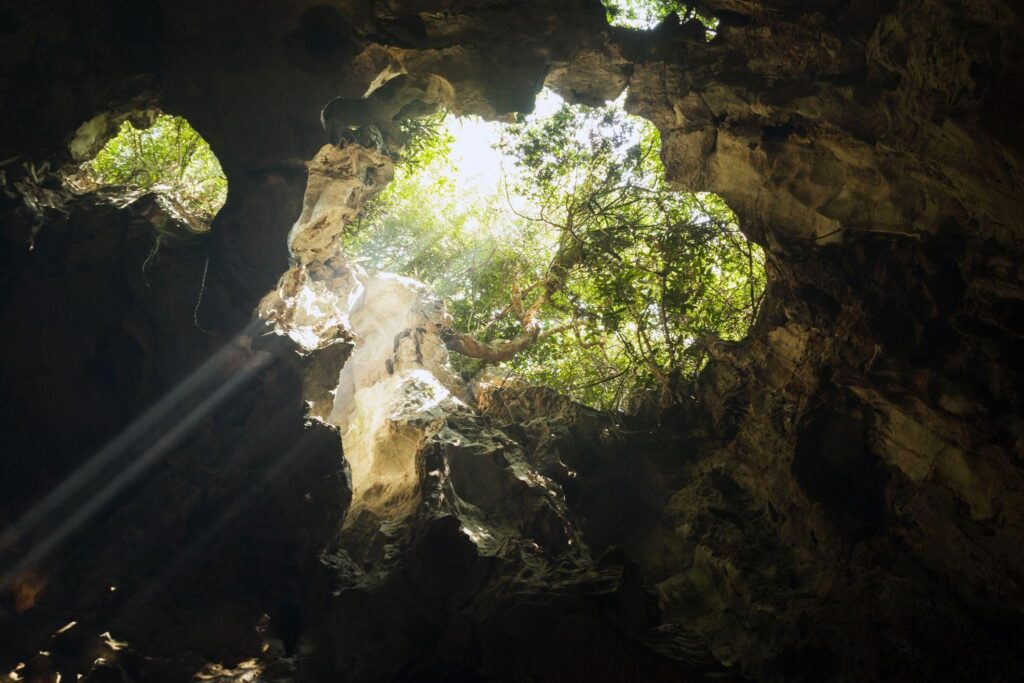
For those reflecting through an ecopsychological lens, this aspect of the narrative feels particularly relevant. Throughout history, human beings have often turned to mountains, forests, deserts, and other natural landscapes during periods of crisis, reflection, or spiritual searching. Such places offer distance from the noise of everyday life and create opportunities for contemplation. While modern research suggests that natural environments can reduce stress and support psychological well-being, the Qur’anic narrative invites us to see something deeper. Creation is not merely therapeutic; it is also a reminder of the Creator.
Yet perhaps the most important lesson of the story is that the cave was never intended to become a permanent home. The Companions did not retreat because isolation was the ideal human condition. Their withdrawal served a specific purpose: preserving faith during a time of fitnah. The cave was a refuge, not a destination. It provided the conditions necessary for survival, but it was not the final vision of human flourishing.
This distinction is crucial because Islam is not a monastic tradition. The Qur’an consistently calls believers toward responsibility, service, justice, and community. There are moments when preservation must come before participation and when retreat becomes necessary for renewal. However, the ultimate goal is not withdrawal from the world but faithful engagement with it. Before communities can flourish, they must first protect the values upon which flourishing depends.
In this sense, the story of the Cave represents the first stage in a larger journey. It teaches that resilience begins with preserving what is essential. Faith, meaning, and connection with Allah form the foundation upon which all other forms of flourishing are built. The journey of Surah Al-Kahf therefore begins not with power or prosperity, but with a small group of believers protecting their faith in a humble cave. Only later will the Surah lead us toward stewardship, wisdom, and the flourishing of society.
The cave is where the journey begins. It is not where it ends.
The Garden: Gratitude and Stewardship
If the story of the Cave is concerned with preserving faith during times of hardship, the story of the two gardens explores a different kind of test: the challenge of abundance. While adversity often reveals the strength of a person’s character, prosperity can reveal something equally important—the state of the heart.
The Qur’an introduces a man who has been blessed with two flourishing gardens. His land is fertile, water flows through it, and his harvests are plentiful. Everything about the scene suggests stability, security, and success. From a worldly perspective, he appears to have achieved what many people spend their lives pursuing. Yet as the story unfolds, it becomes clear that the real focus is not the beauty of the gardens themselves but the attitude of their owner.
Rather than responding to his blessings with gratitude and humility, the man gradually becomes consumed by arrogance. He begins to see his prosperity as evidence of his own superiority and assumes that his success will continue indefinitely. The abundance around him creates an illusion of permanence. In forgetting the source of his blessings, he also forgets his dependence upon Allah.
This is a deeply human tendency. Hardship often reminds people of their limitations and encourages them to seek help beyond themselves. Prosperity, by contrast, can create the impression that everything is under control. Wealth, status, and material success may lead people to believe they are self-sufficient, when in reality they remain just as dependent on Allah as before.

The story speaks powerfully to the modern world. Contemporary societies frequently encourage the pursuit of growth, productivity, and consumption as ends in themselves. Success is often measured by accumulation—more wealth, more possessions, more influence, more convenience. Yet despite extraordinary material progress, many people continue to experience dissatisfaction, anxiety, and a sense of emptiness. The story of the gardens suggests that abundance alone cannot satisfy the deeper needs of the human heart.
At another level, the narrative offers an important lesson about our relationship with the natural world. The gardens represent the beauty, productivity, and generosity of creation. They remind us that the Earth is capable of providing extraordinary blessings. Yet the owner’s mistake was not simply pride; it was forgetting the true nature of his relationship with what he had been given. He viewed the land primarily as a possession rather than a trust.
This distinction lies at the heart of the Islamic concept of stewardship. The Qur’an describes human beings as khalifah—stewards entrusted with responsibility rather than absolute owners. Creation ultimately belongs to Allah, and human beings are temporary caretakers who are accountable for how they use what has been placed in their hands. The concepts of amanah (trust) and mizan (balance) further reinforce this perspective, reminding believers that the natural world is not merely a collection of resources to be exploited but a manifestation of divine wisdom that should be treated with care and respect.
Seen in this light, the destruction of the gardens takes on a deeper meaning. It is not merely a punishment for arrogance but a reminder of the impermanence of worldly things. Wealth can disappear. Landscapes can change. Circumstances can shift unexpectedly. The blessings we enjoy today are never entirely our own. They are gifts, and like all gifts, they carry responsibilities.
The story therefore invites readers to ask an uncomfortable but necessary question: what kind of relationship do we have with the blessings we have been given? Whether those blessings take the form of wealth, land, education, influence, or opportunity, do they lead us toward gratitude and stewardship, or toward self-sufficiency and pride? Do they deepen our awareness of Allah, or distract us from Him?
The movement from the Cave to the Garden is significant. Having learned the importance of preserving faith, the reader is now confronted with the challenge of abundance. Resilience is not only about remaining faithful during hardship; it is also about remaining faithful during prosperity. The tests may differ, but the underlying question remains the same: will we remember Allah when life becomes comfortable?
In the journey of Surah Al-Kahf, the Cave teaches preservation. The Garden teaches stewardship. Together, they prepare the ground for the next stage of the journey: the pursuit of wisdom in a world that often mistakes knowledge for understanding.
Musa and Khidr: Wisdom in an Age of Uncertainty
If the story of the Cave teaches the preservation of faith and the story of the Garden teaches stewardship, the journey of Musa (AS) and Khidr introduces a third dimension of resilience: wisdom. More specifically, it addresses one of the deepest challenges facing human beings in every age—the challenge of living with uncertainty.
The narrative begins with a remarkable image. Musa (AS), one of the greatest prophets of Allah, embarks on a journey in search of knowledge. Despite his status, his revelation, and his leadership, he is instructed to seek out a servant of Allah who possesses knowledge that he doesn’t. The story therefore begins with an act of humility. Before any lessons are taught, the reader is reminded that no human being, regardless of their position, possesses complete understanding.
This lesson feels particularly relevant in the modern world. We live in an age of extraordinary access to information. Scientific discoveries, technological innovations, and global communication have transformed human life in ways previous generations could scarcely imagine. Yet despite these advances, uncertainty remains an unavoidable part of the human experience. We still struggle to understand suffering. We still encounter unexpected loss. We still face questions that resist easy answers.
As Musa accompanies Khidr, he witnesses a series of actions that seem confusing, unjust, and even troubling. A boat belonging to poor fishermen is deliberately damaged. A young boy is killed. A wall is repaired in a town whose people had refused hospitality. From Musa’s perspective, each action appears difficult to justify. His questions arise naturally from his concern for justice and his desire to understand.
Only later are the hidden wisdoms revealed.

The damaged boat protects its owners from a tyrannical ruler who is seizing vessels by force. The death of the boy prevents a future tragedy that would have brought immense hardship to his believing parents. The repaired wall safeguards a treasure intended for two vulnerable orphans. What initially appeared harmful is revealed to be part of a larger wisdom that Musa could not yet perceive.
The story does not discourage inquiry or critical thinking. Musa’s questions are sincere and understandable. Rather, the narrative teaches humility before the complexity of reality. Human beings often assume that what they see is the whole picture, yet much of life unfolds beyond the limits of immediate perception. We are constantly making judgments based on incomplete information, unaware of the countless factors that lie outside our field of vision.
This insight carries profound psychological significance. Many forms of anxiety emerge from the desire for certainty and control. Human beings naturally seek explanations for suffering and predictability in their lives. When events fail to make sense, frustration, fear, and distress often follow. The story of Musa and Khidr offers a different perspective. It reminds believers that uncertainty is not necessarily a sign of meaninglessness. Sometimes the absence of understanding reflects the limits of human knowledge rather than the absence of divine wisdom.
The lesson is equally relevant in relation to the natural world. Modern societies often approach ecological and social systems with a high degree of confidence, assuming that complex problems can be solved through technical expertise alone. Yet ecosystems, communities, and human lives are extraordinarily intricate. Actions that appear beneficial in the short term may create unforeseen consequences, while disruptions that seem destructive may contribute to long-term resilience. The story encourages a posture of humility toward complexity—a recognition that wisdom requires more than information.
Perhaps one of the defining challenges of our age is that information has become abundant while wisdom remains scarce. We know more than previous generations, yet knowledge alone does not necessarily lead to understanding. Wisdom emerges when knowledge is joined with humility, patience, and awareness of human limitations. It grows through reflection rather than reaction and through trust rather than control.
In this sense, the journey of Musa and Khidr occupies a crucial place within the broader movement of Surah Al-Kahf. The Cave teaches the preservation of faith. The Garden teaches stewardship of blessings. Musa and Khidr teach the humility necessary to navigate a world that cannot always be understood on our own terms. Without wisdom, stewardship can become arrogance, and knowledge can become a source of pride. Wisdom provides the guidance needed to transform faith and responsibility into right action.
The journey of Surah Al-Kahf therefore continues to unfold. Having learned preservation and stewardship, the reader is now invited to cultivate wisdom. The final story will show what becomes possible when faith, stewardship, and wisdom are brought together in service of society. It is here, in the story of Dhul-Qarnayn, that the Surah reaches its broadest horizon and presents a vision of leadership, justice, and civilizational flourishing.
Dhul-Qarnayn: Leadership and Flourishing Civilization
The final major narrative of Surah Al-Kahf broadens the horizon of the discussion. Having explored the preservation of faith through the Companions of the Cave, the responsibilities that accompany abundance through the story of the Gardens, and the cultivation of wisdom through the journey of Musa and Khidr, the Surah now turns its attention to a larger question: what happens when faith, stewardship, and wisdom are translated into action within society?
The answer comes through the story of Dhul-Qarnayn.
Unlike the previous narratives, which focus primarily on individuals and small groups, this story unfolds on a civilizational scale. Dhul-Qarnayn is presented as a leader who has been granted authority, resources, and capability. Yet what distinguishes him is not the extent of his power but the manner in which he uses it. Throughout the narrative, his actions reveal a consistent commitment to justice, responsibility, and service.
As he travels through different lands, Dhul-Qarnayn encounters diverse peoples and challenges. Rather than seeking domination or personal glory, he listens carefully, assesses each situation, and responds according to the needs of the communities he encounters. His leadership is characterized by wisdom rather than impulse, responsibility rather than exploitation, and service rather than self-interest.
This stands in sharp contrast to many contemporary understandings of power. Throughout history, power has often been treated as an end in itself. Individuals, institutions, and nations frequently pursue influence, wealth, and control for their own benefit. Success is commonly measured by the ability to dominate competitors, accumulate resources, or expand authority. Yet the Qur’anic portrait of Dhul-Qarnayn presents an entirely different model.
For him, power is not ownership.
It is trust.
Authority is not a privilege.
It is a responsibility.
One of the most memorable moments in the story occurs when a vulnerable community seeks protection from the destructive forces of Ya’juj and Ma’juj (Gog and Magog). Rather than exploiting their fear or dependence, Dhul-Qarnayn works alongside them to construct a barrier. The project is collaborative rather than authoritarian. He mobilizes local participation, applies practical knowledge, and then attributes success not to himself but to the mercy of Allah.
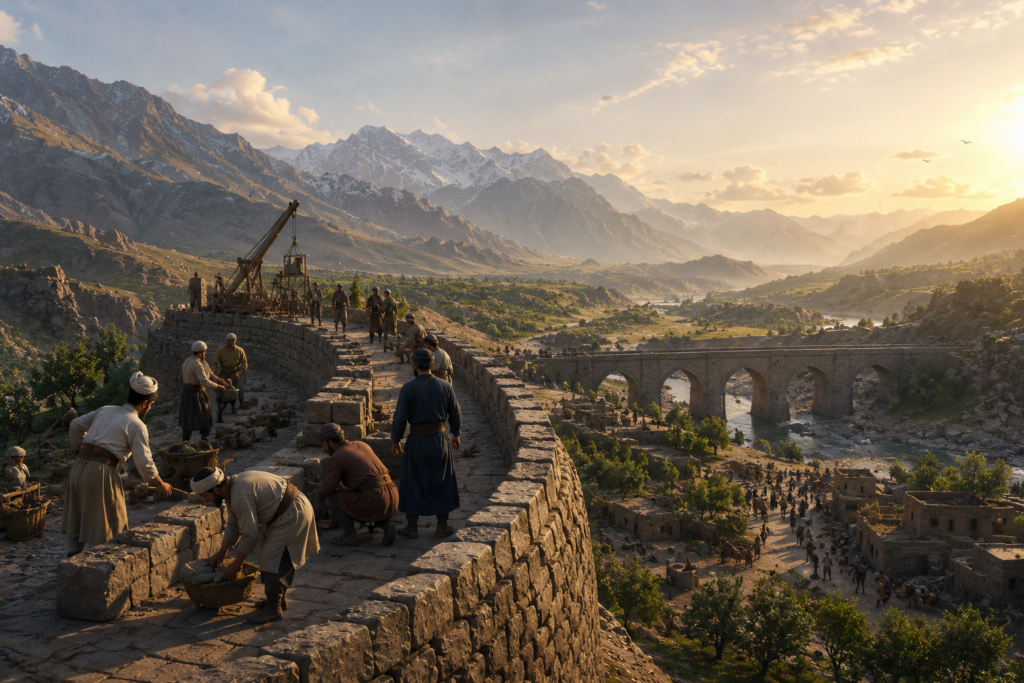
This combination of competence and humility is significant. It suggests that effective leadership requires more than technical skill. It requires moral character. Knowledge without humility can become arrogance. Authority without accountability can become oppression. Strength without compassion can become tyranny. Dhul-Qarnayn demonstrates how these qualities can be brought into balance.
The story also expands our understanding of resilience. Earlier narratives focused primarily on preserving faith, stewarding blessings, and cultivating wisdom. Dhul-Qarnayn shows that resilience must eventually extend beyond the individual. Human flourishing is not merely a personal achievement; it is a collective project. Healthy individuals require healthy families, healthy communities, and just social structures. Without these wider foundations, individual well-being remains fragile.
This insight feels particularly relevant in the context of contemporary challenges. Many of the crises facing humanity today—ecological degradation, social fragmentation, inequality, and conflict—cannot be solved solely through individual lifestyle changes. They require cooperation, long-term thinking, ethical leadership, and institutions capable of serving the common good. In this sense, resilience is not simply about personal survival. It is about creating conditions in which entire communities can thrive.
The Islamic tradition has long recognized this reality. The concept of Umran, developed most famously by Ibn Khaldun, describes the flourishing of civilization through healthy relationships between people, resources, institutions, and moral values. Societies do not flourish merely because they possess wealth or advanced technology. They flourish when they cultivate justice, trust, cooperation, and stewardship. These are precisely the qualities embodied by Dhul-Qarnayn.
From an ecological perspective, the lesson is equally profound. Stewardship cannot remain confined to personal behaviour. Caring for creation requires communities capable of managing resources wisely, protecting ecosystems, and thinking beyond immediate gain. Just as healthy landscapes depend upon balance and cooperation among countless living systems, healthy societies depend upon relationships rooted in trust, responsibility, and shared purpose.
Seen in this light, the story of Dhul-Qarnayn represents the culmination of the journey that began in the Cave. The progression is both logical and beautiful. Faith is first preserved. Blessings are then stewarded responsibly. Wisdom is cultivated through humility. Finally, these qualities are translated into leadership and service for the benefit of others.
The movement of Surah Al-Kahf is therefore not one of withdrawal from the world but of engagement with it. The Surah begins with a small group of believers seeking refuge from corruption and concludes with a leader working to protect communities and promote flourishing. The journey moves steadily outward—from the inner life of faith to the wider responsibilities of civilization.
This progression carries an important message for our own time. The goal of spiritual life is not merely personal salvation or private well-being. Rather, faith is meant to shape how human beings relate to one another, how they care for creation, and how they contribute to the flourishing of society. The preservation of faith, the stewardship of blessings, and the pursuit of wisdom ultimately find their fullest expression in service.
The story of Dhul-Qarnayn therefore brings the reader to the threshold of a deeper realization. The cave was never the destination. Preservation was only the beginning. The journey of Surah Al-Kahf points beyond survival toward regeneration, beyond refuge toward responsibility, and beyond the individual toward the flourishing of communities and civilizations aligned with divine guidance.
From the Cave to the Community: Faith, Refuge, and Regeneration
Among the prophetic narrations concerning times of tribulation is a hadith that has inspired reflection for generations. The Prophet ﷺ said that a time would come when the best wealth of a Muslim would be sheep that he takes to the mountaintops and places of rainfall, fleeing with his religion from trials. Read alongside the story of the Companions of the Cave, this narration appears to present a clear message: there are moments in history when preserving faith may require distance from a corrupt environment.
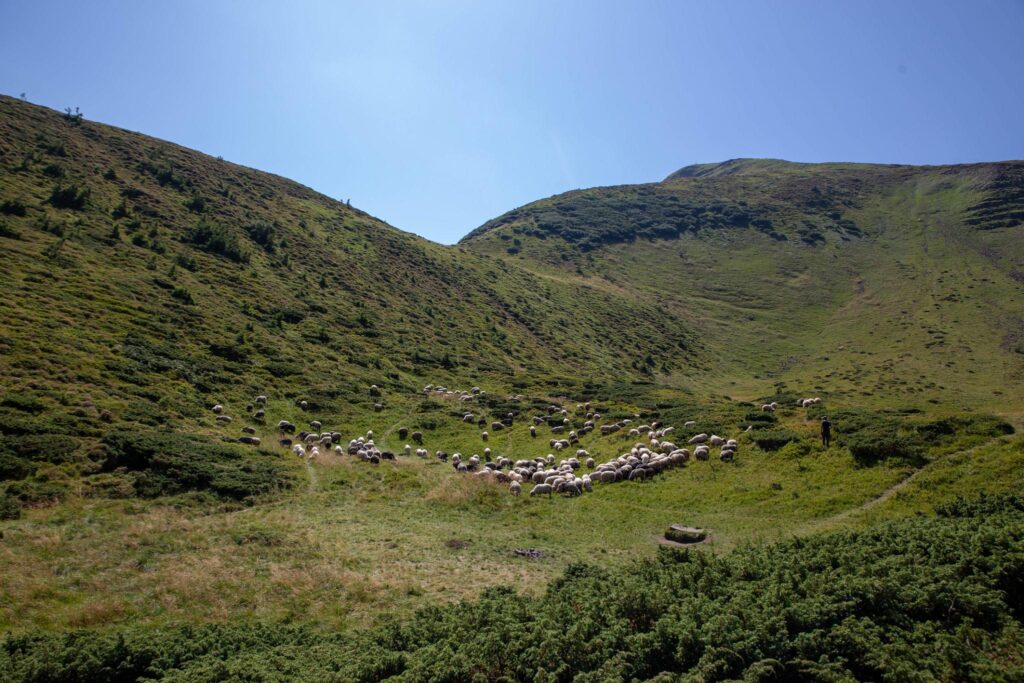
Yet if we stop there, we risk missing the larger vision of Islam.
The Qur’an and Sunnah consistently emphasize the importance of family, neighbourhood, community, cooperation, and social responsibility. The Prophet ﷺ did not establish a monastic tradition detached from society. Instead, he built a community in Madinah grounded in worship, justice, mutual support, and stewardship. Islam does not celebrate isolation as an ideal way of life. Rather, it recognizes that periods of withdrawal may sometimes be necessary when faith itself is under threat.
This distinction is crucial because it helps us understand both the story of the Cave and the hadith of the mountains in a more balanced way. The cave was not the destination. The mountain was not the destination. They were places of refuge—spaces where faith could be preserved when the surrounding environment became spiritually destructive. Preservation was the purpose, not permanent separation.
When viewed in the broader context of Surah Al-Kahf, this becomes even clearer. The Surah does not end with the Companions of the Cave. In fact, the cave is only the beginning of a much larger journey. The narrative moves from refuge to stewardship, from stewardship to wisdom, and from wisdom to leadership and civilizational flourishing. The direction of the Surah is not away from society but toward the renewal of society.
This pattern mirrors a deeper rhythm found throughout Islamic history. Before the flourishing of Madinah came the hardships of Makkah. Before the establishment of a healthy community came years of perseverance, sacrifice, and preservation. The early Muslims did not withdraw from society because isolation was superior; they endured hardship to build a community capable of embodying divine guidance.
Perhaps this is one of the most relevant lessons of Surah Al-Kahf for our own time.
Many people today sense that something is missing in modern life. Despite technological progress and material abundance, loneliness, anxiety, social fragmentation, and ecological degradation continue to grow. Relationships with neighbours have weakened. Families often struggle under economic and social pressures. Human beings spend increasing amounts of time in digital environments while becoming increasingly disconnected from the natural world.
In response to these challenges, people across the world are exploring new ways of living together. Ecovillages, intentional communities, regenerative farms, cohousing projects, and local resilience initiatives have emerged as attempts to rebuild social connection and restore healthier relationships with the Earth. Although these movements arise from diverse cultural and philosophical backgrounds, many share a common intuition: human flourishing depends upon the quality of our relationships—with one another, with place, and with the wider living world.
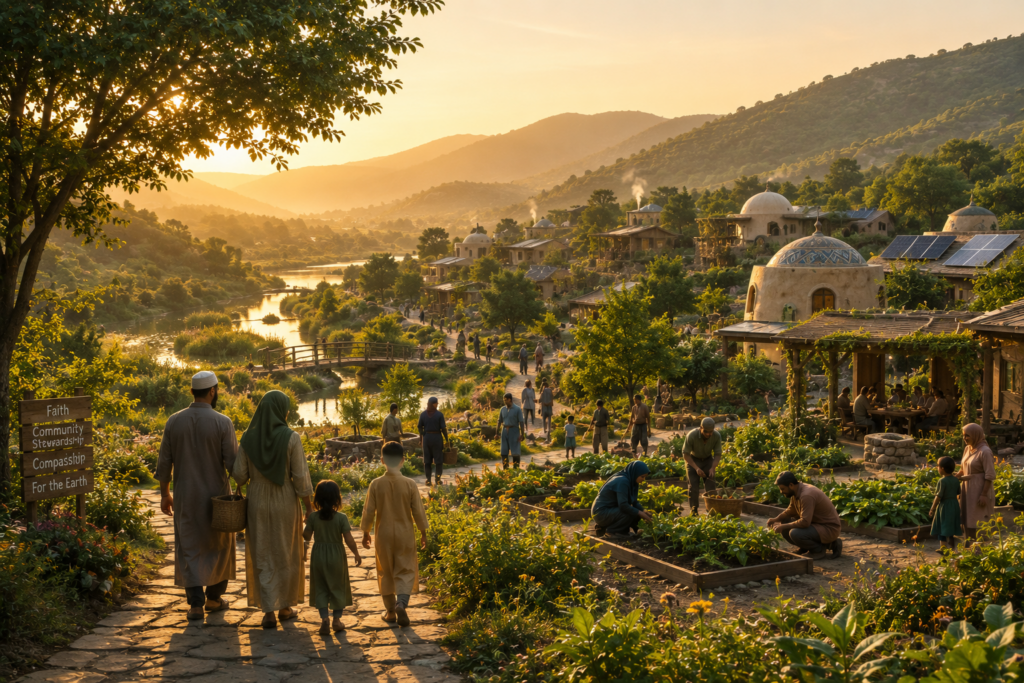
This intuition resonates strongly with the Islamic worldview. A healthy community is not simply a collection of individuals sharing physical space. It is a network of relationships rooted in shared values, mutual care, trust, and responsibility. Strong families contribute to strong neighbourhoods. Strong neighbourhoods contribute to strong communities. Strong communities become the foundation of flourishing civilizations.
From this perspective, the journey from the Cave to the Community takes on a deeper meaning. The Companions of the Cave preserved faith in the face of corruption, but preservation alone was never the final goal. Faith is ultimately meant to shape how people live together, how they care for creation, and how they contribute to the common good. The purpose of refuge is renewal. The purpose of preservation is regeneration.
This understanding also helps reconcile the apparent tension between the hadith encouraging withdrawal during times of fitnah and other narrations that praise believers who remain among people and patiently endure their difficulties. Both teachings can be true because they address different circumstances. There may be moments when stepping back becomes necessary to protect what is essential. Yet the broader aim of Islam remains the cultivation of communities characterized by faith, compassion, justice, and stewardship.
In this sense, the cave and the mountain can be understood as symbols of resilience rather than permanent withdrawal. They remind us that there are times when human beings must protect the foundations of their faith and identity. However, they also remind us that preservation is only the first step. The larger task is to translate faith into lived reality through relationships, institutions, and communities that embody divine guidance.
The movement of Surah Al-Kahf therefore points toward a hopeful vision. It begins with a small group of believers seeking refuge, but it culminates in a vision of leadership, cooperation, and a flourishing society. The journey moves from survival to stewardship, from stewardship to wisdom, and from wisdom to civilization.
The destination is not the cave.
The destination is not the mountain.
The destination is a community aligned with fitrah—a community rooted in remembrance of Allah, strengthened by healthy families and neighbourhoods, guided by wisdom and justice, and committed to caring for both people and creation.
Such communities may not remove every challenge from human life, but they create the conditions in which faith, resilience, and flourishing can take root. And perhaps that is one of the deepest lessons of Surah Al-Kahf: the goal is not merely to survive periods of fitnah, but to preserve what is essential so that renewal becomes possible.
Toward Wholeness: Relationships, Community, and Human Flourishing
As the stories of Surah Al-Kahf unfold, a deeper pattern gradually emerges. Although the narratives differ in setting, characters, and circumstances, they are connected by a common theme: the quality of human relationships. The challenges faced by the Companions of the Cave, the owner of the gardens, Musa (AS), and Dhul-Qarnayn are not merely individual tests. They are fundamentally relational tests that reveal how human beings understand themselves, their responsibilities, and their place within creation.
The young believers of the Cave sought to preserve their relationship with Allah when society threatened to pull them away from the truth. Their story reminds us that faith is not merely a private belief but a living relationship that requires care and protection. When social pressures become overwhelming, preserving that relationship may require courage, sacrifice, and discernment.
The owner of the gardens faced a different challenge. His relationship with material blessings became distorted when gratitude gave way to self-sufficiency. In forgetting the Giver, he also lost sight of the true nature of the gifts he had been entrusted with. His story illustrates how easily abundance can disrupt the balance between human beings, creation, and the Creator when stewardship is replaced by possession.
The journey of Musa and Khidr shifts attention toward another relationship: the relationship with knowledge and the self. Musa’s experience reveals that wisdom begins not with certainty but with humility. Human beings often struggle because they assume they possess a complete understanding of reality. Yet growth frequently begins when we acknowledge the limits of our knowledge and remain open to truths beyond our immediate perception.
Finally, the story of Dhul-Qarnayn expands the discussion to the level of society. His leadership demonstrates that power is ultimately relational. Authority is not simply about control; it is about responsibility toward others. His example highlights the importance of justice, cooperation, and stewardship in creating the conditions under which communities can flourish.
Taken together, these narratives suggest that human flourishing cannot be reduced to a single dimension of life. It is not achieved through wealth alone, knowledge alone, spirituality alone, or social success alone. Rather, flourishing emerges when multiple relationships are brought into balance.
Islamic tradition understands human beings as inherently relational creatures. At the centre of life is the relationship with Allah, which provides meaning, direction, and purpose. From this foundation flow other relationships: the relationship with the self, the relationship with family, the relationship with neighbours, the relationship with the wider community, and the relationship with creation. These relationships are interconnected. When one becomes neglected, the others often suffer as well.
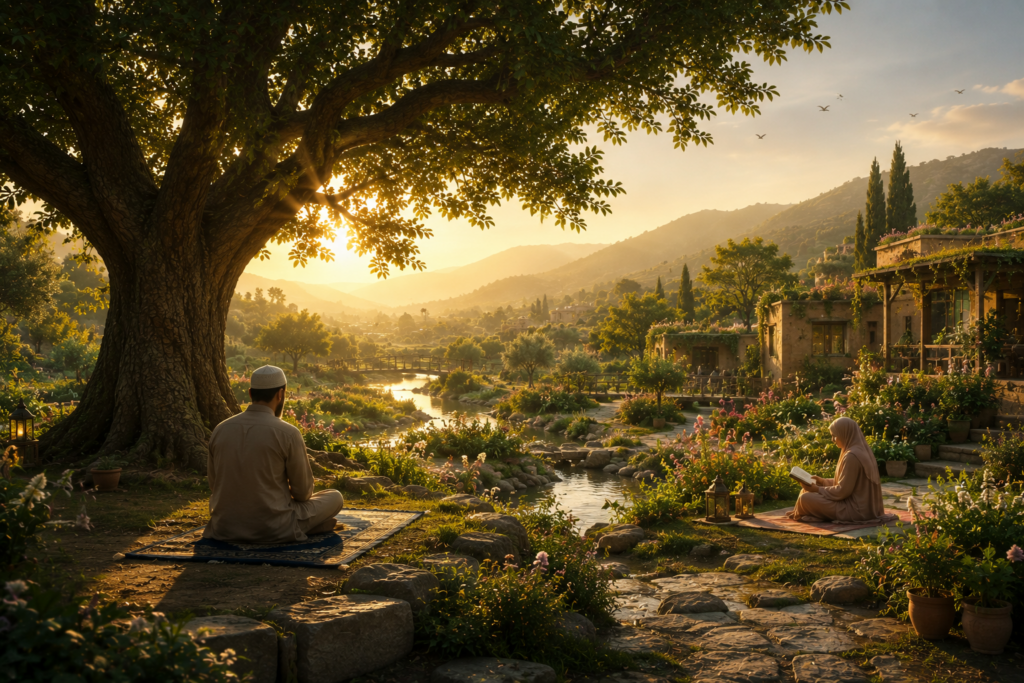
This interconnectedness is increasingly visible in the challenges of the modern world. Social isolation affects mental health. Family breakdown weakens communities. Ecological degradation reflects a damaged relationship with creation. Spiritual disconnection can leave individuals searching for meaning in places that cannot ultimately satisfy the human heart. What often appears as a collection of separate crises may in fact be different expressions of the same underlying fragmentation.
The Qur’an offers a different vision. It presents human life as a trust embedded within a network of relationships that extend outward from the individual to society and ultimately to the wider world of creation. Family becomes the first community in which values are learned and transmitted. Neighbourhoods become places of mutual support and belonging. Communities provide opportunities for cooperation, service, and collective flourishing. Creation itself serves as both a source of sustenance and a continual reminder of divine wisdom.
Seen in this light, the journey of Surah Al-Kahf can be understood as a journey toward wholeness. The stories invite believers to restore balance where fragmentation has occurred and to nurture the relationships upon which genuine well-being depends. Faith, gratitude, wisdom, stewardship, and justice are not isolated virtues. They are qualities that sustain healthy relationships and allow both individuals and communities to flourish.
In the language of Islamic thought, this movement toward balance is closely connected to fitrah—the innate disposition through which human beings are oriented toward truth, harmony, and remembrance of Allah. To move toward fitrah is therefore to move toward wholeness. It is to recover a way of living in which relationships with Allah, self, family, community, and creation reinforce one another rather than compete with one another.
The stories of Surah Al-Kahf do not merely teach believers how to survive times of trial. They point toward a more profound possibility: the restoration of the relationships that allow human beings, communities, and even civilizations to flourish. In this sense, the Surah is not only a guide for protection during fitnah but also a guide for renewal.
It is this vision of wholeness that prepares us to better understand the nature of the Dajjālic challenge and why the return to fitrah remains one of the most urgent tasks of our time.
The Dajjālic Challenge and the Return to Fitrah
If Surah Al-Kahf can be understood as a journey toward wholeness, then the trial of Dajjal may be understood as a force of fragmentation. While Islamic tradition describes Dajjal as a future individual whose appearance will constitute one of the greatest trials in human history, many scholars have also reflected upon the deeper characteristics associated with his deception. At its heart, the Dajjālic challenge is not merely a test of power, but a test of perception—a trial in which appearances obscure reality and falsehood becomes increasingly difficult to distinguish from truth.
This perspective helps explain why Surah Al-Kahf is so closely connected to protection from fitnah. Each of its major stories addresses a different form of deception that continues to confront human beings across time. The Companions of the Cave faced the illusion that social acceptance was more valuable than faith. The owner of the gardens succumbed to the illusion that material abundance could provide security and permanence. Musa (AS) was confronted with the limits of human understanding, while Dhul-Qarnayn demonstrated that power can either serve truth or become corrupted by it.
Although these stories emerged in a very different historical context, their underlying themes remain strikingly relevant today. Modern societies often encourage individuals to define themselves through consumption, productivity, visibility, and status. Technological advancement promises convenience and control, yet many people experience increasing loneliness, anxiety, and uncertainty. Human beings possess unprecedented access to information, but information alone has not necessarily produced wisdom. The pursuit of economic growth frequently occurs alongside ecological degradation, while social connectivity expands even as genuine community becomes more difficult to sustain.
From an Islamic perspective, these challenges can be understood not merely as social or psychological problems but as symptoms of a deeper disconnection. Human beings were created to live in conscious relationship with Allah, with one another, and with creation. When these relationships become fragmented, imbalance follows. Spiritual disconnection can lead to a loss of meaning and purpose. Social disconnection can produce loneliness and isolation. Ecological disconnection can foster patterns of exploitation that damage both people and the natural world.

Seen in this light, the stories of Surah Al-Kahf offer more than moral lessons; they provide an antidote to fragmentation. The Cave teaches steadfastness when society pressures individuals to compromise their values. The Garden teaches gratitude and stewardship in a culture that often celebrates accumulation without responsibility. Musa and Khidr teach humility in an age that frequently confuses information with wisdom. Dhul-Qarnayn teaches ethical leadership at a time when power is often measured by dominance rather than service.
What unites these lessons is their orientation toward fitrah. In Islamic thought, fitrah refers to the innate disposition through which human beings are naturally oriented toward truth, balance, and recognition of Allah. It represents a state of harmony in which spiritual, psychological, social, and ecological dimensions of life are integrated rather than fragmented. To live in accordance with fitrah is therefore not merely to hold certain beliefs, but to embody a way of being that reflects balance, gratitude, responsibility, and remembrance.
The challenge of every age is to remain rooted in this orientation. The forms of fitnah may change, but the underlying struggle remains remarkably consistent. Human beings are continually tempted to place their trust in wealth, status, power, or knowledge rather than in Allah. They are encouraged to seek fulfillment through accumulation rather than relationship, through consumption rather than stewardship, and through control rather than trust.
Surah Al-Kahf responds to these temptations by repeatedly directing attention back to what is essential. Faith is more valuable than acceptance. Gratitude is more valuable than possession. Wisdom is more valuable than certainty. Stewardship is more valuable than domination. These lessons do not remove the trials of life, but they provide a compass by which believers can navigate them.
In this sense, the protection offered by Surah Al-Kahf extends beyond safeguarding believers from a future tribulation. The Surah also teaches how to live faithfully in the present. It reminds us that resilience is not found in worldly power alone but in maintaining right relationships—with Allah, with ourselves, with our communities, and with creation. By calling believers back to fitrah, Surah Al-Kahf offers not merely protection from deception but a path toward clarity, balance, and flourishing.
Conclusion: Returning to Fitrah in Times of Trial
Surah Al-Kahf is often recited as a source of protection, and rightly so. The Prophet ﷺ taught that it offers protection from the trials of Dajjal, reminding believers that periods of deception and confusion are an inevitable part of human history. Yet as we journey through its stories, it becomes clear that the Surah offers far more than protection alone. It provides a vision of how human beings can remain grounded, faithful, and resilient in the midst of uncertainty.
The movement of the Surah is both subtle and profound. It begins with a small group of believers seeking refuge in a cave, determined to preserve their faith in the face of overwhelming pressure. It then turns to a flourishing garden, where abundance becomes a test of gratitude and stewardship. Through the journey of Musa and Khidr, it reveals the importance of humility before divine wisdom, and through the story of Dhul-Qarnayn, it demonstrates how faith and wisdom can be translated into responsible leadership and service to society.
Read together, these narratives describe a journey from preservation to flourishing. They remind us that faith is not merely about surviving hardship, nor is it confined to personal spirituality. Faith shapes how we relate to wealth, knowledge, power, community, and creation. It influences how we respond to uncertainty, how we care for the Earth, and how we contribute to the well-being of others.
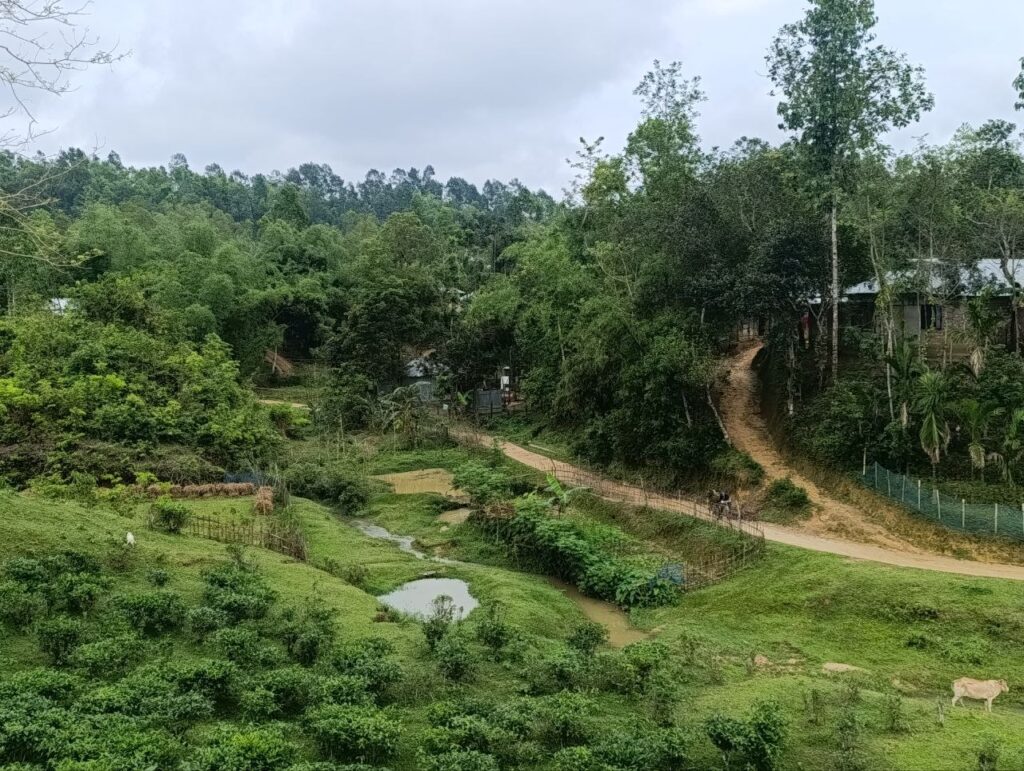
Perhaps one of the most important lessons of Surah Al-Kahf is that resilience cannot be separated from relationships. Human flourishing depends upon maintaining a healthy relationship with Allah, nurturing the self, strengthening families and communities, and fulfilling our responsibilities toward creation. When these relationships are neglected, fragmentation and imbalance often follow. When they are restored, the possibility of renewal emerges.
In a world increasingly marked by distraction, consumerism, social fragmentation, and ecological uncertainty, the message of Surah Al-Kahf remains remarkably relevant. Its stories invite us to look beyond appearances, to question the assumptions of our age, and to return to what is most essential. They remind us that true security is not found in wealth, status, knowledge, or power alone, but in remaining anchored to divine guidance.
Ultimately, the journey of Surah Al-Kahf is a journey back to fitrah—the innate disposition toward truth, balance, gratitude, and remembrance of Allah. It is a call to move from fragmentation toward wholeness, from confusion toward clarity, and from mere survival toward a life of stewardship, wisdom, community, and flourishing.
The cave was never the destination. It was a place of preservation before renewal, refuge before responsibility. The destination is a life aligned with fitrah and a community rooted in faith, justice, compassion, and stewardship of creation. Beyond this, the journey of Surah Al-Kahf reminds us that every path in this world ultimately leads toward eternity, where the truest measure of success is not what we possessed, but who we became before Allah.
References
Qur’an
The Qur’an. Surah Al-Kahf (18:9–26, 18:32–44, 18:60–82, 18:83–98).
Hadith
Al-Bukhari, Muhammad ibn Ismail. Sahih al-Bukhari.
Muslim, Muslim ibn al-Hajjaj. Sahih Muslim.
Ibn Majah, Muhammad ibn Yazid. Sunan Ibn Majah.
Al-Albani, Muhammad Nasiruddin. Sahih al-Jami’ al-Saghir.
Classical and Contemporary Islamic Scholarship
Ibn Kathir. Tafsir al-Qur’an al-‘Azim.
Sayyid Qutb. Fi Zilal al-Qur’an (In the Shade of the Qur’an).
Hosein, Imran N. Surah Al-Kahf and the Modern Age.
Nadwi, Abul Hasan Ali. Faith Versus Materialism: The Message of Surat al-Kahf.
Gilani, Maulana Manazir Ahsan. Tazkeer Ba-Suratul-Kahaf.
Ibn Abi al-Dunya. Kitab al-‘Uzlah (The Book of Seclusion).
Ibn Khaldun. Al-Muqaddimah.
Psychology, Ecopsychology, and Nature Connection
Bratman, G. N., Anderson, C. B., Berman, M. G., et al. (2019). Nature and mental health: An ecosystem service perspective. Science Advances, 5(7).
Hartig, T., Mitchell, R., de Vries, S., & Frumkin, H. (2014). Nature and health. Annual Review of Public Health, 35, 207–228.
Jordan, M., & Hinds, J. (Eds.). (2016). Ecotherapy: Theory, Research and Practice.
Kaplan, R., & Kaplan, S. (1989). The Experience of Nature: A Psychological Perspective.
Roszak, T. (1992). The Voice of the Earth: An Exploration of Ecopsychology.
Wilson, E. O. (1984). Biophilia.
Ecovillages, Community, and Regeneration
Dawson, Jonathan. (2006). Ecovillages: New Frontiers for Sustainability.
Litfin, Karen T. (2014). Ecovillages: Lessons for Sustainable Community.
Global Ecovillage Network. Ecovillage.org.
Further Reading
Louv, Richard. (2005). Last Child in the Woods: Saving Our Children from Nature-Deficit Disorder.
Seyyed Hossein Nasr. (1996). Religion and the Order of Nature.
Foltz, Richard C., Denny, Frederick M., & Baharuddin, Azizan (Eds.). (2003). Islam and Ecology: A Bestowed Trust.