
Author: Tasnim Tarannum (HRM Lecturer, North South University)
Earthworms might look quite dreadful to a lot of people, but they are one of the guardian angels of Mother Earth. It plays a dominant role in maintaining soil fertility and sustainability, and is therefore considered essential in natural farming. In classical Greek times, Aristotle termed this species “the intestine of the soil” because one of its major functions is tilling the earth. Earthworms burrow through the soil many times a day, particularly in a monsoon climate, to obtain oxygen from the air through their bodies and create numerous small tunnels by turning the soil upside down. These tunnels facilitate the perforation of air, infiltration of rainwater, and reduce the possibility of land erosion. It also keeps the soil structure intact by allowing sufficient moisture and aeration necessary for plant roots. Moreover, the excrement left by earthworms after consumption of organic matter provides valuable nutrition for numerous tiny microorganisms of the soil. As earthworms mostly live on waste inputs like kitchen scraps, leaf litter, straw mulch, and animal manures, they break these down into simple nutrients that can be taken up easily by plants and other organisms. Secretion by these tiny creatures provides nitrogen, phosphorous and other metabolites which are fundamental for healthy plant growth.
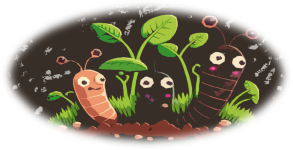
Earthworms are one of the most important soil animals, which are potentially helpful in the preservation of biodiversity and soil structure. Research in different countries shows that seed germination, root biomass, fruit yield, and crop production have significantly increased with the introduction of vermicompost produced by different varieties of earthworms. As the penetration of chemical farming greatly endangers this species of ecological engineers, it is imperative that such natural ploughmen are brought back and promoted by farmers who are practicing organic farming methods.