
Author: Md. Hamidur Rahman (Marine Engineer, Permaculturist)
Table of Contents
· Introduction
· The Crisis of Modern Urban Architecture
· Understanding Biophilia
· Psychological Effects of Nature Disconnection
· Biophilic Architecture and Human Well-being
· Permaculture as an Urban Design Framework
· Urban Permaculture and Psychological Resilience
· The Future of Regenerative Cities
· Conclusion
· References
Introduction
Cities have become the dominant human habitat of the modern world. Urban environments concentrate economic activity, technology, education, and cultural life, but they also concentrate stress, pollution, social fragmentation, and ecological degradation. As urban populations continue to grow, architects and planners are increasingly confronted with an important question: how can cities support both ecological sustainability and human psychological well-being?
Modern urban architecture has often prioritized efficiency, expansion, and economic productivity while neglecting humanity’s deeper relationship with nature. In response to this growing imbalance, concepts such as biophilia and permaculture have emerged as alternative frameworks for rethinking the design of cities. These approaches suggest that human well-being is inseparable from ecological connection and that future urban environments must function more like living ecosystems rather than industrial machines.
The Crisis of Modern Urban Architecture
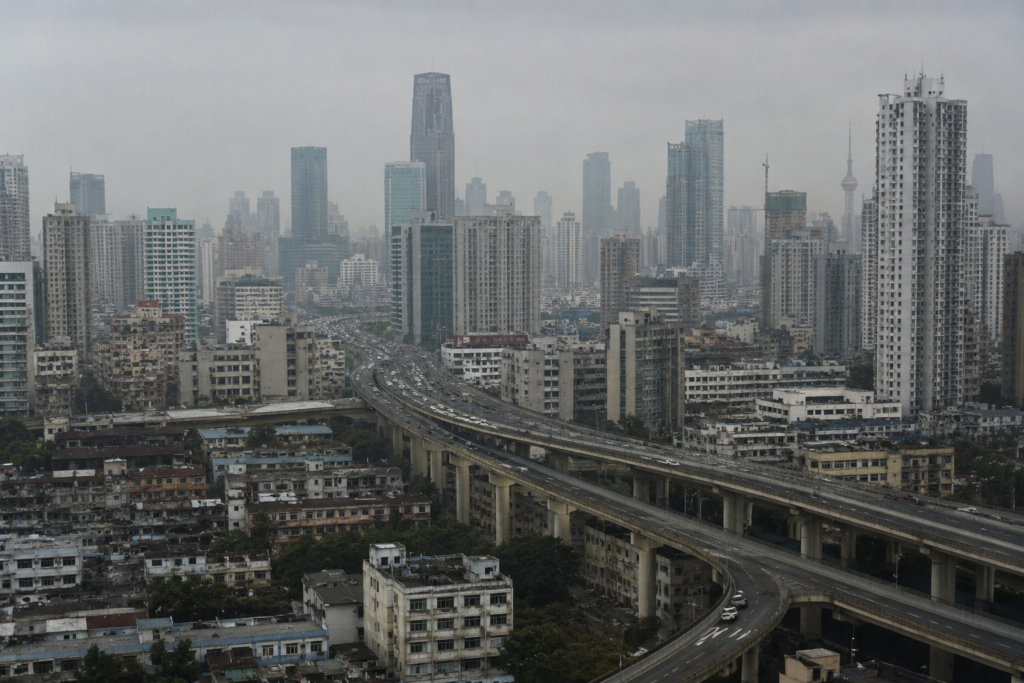
Contemporary cities are largely designed according to industrial and economic logic. Urban spaces prioritize transportation systems, commercial growth, vertical expansion, and land optimization. While these systems increase efficiency, they frequently create environments that are psychologically exhausting and ecologically unstable.
Concrete surfaces dominate landscapes, reducing biodiversity and increasing urban heat. High-rise buildings often disconnect people from direct contact with soil, vegetation, and natural rhythms. Artificial lighting extends activity beyond natural cycles, while noise pollution and overcrowding continuously stimulate the human nervous system.
Urban residents today often experience life within enclosed environments dominated by screens, traffic, and artificial conditions. Public spaces designed for social interaction are increasingly replaced by commercialized or privatized spaces. As a result, many cities generate feelings of anonymity, loneliness, emotional fatigue, and sensory overload.
This crisis is not merely environmental or architectural; it is also psychological.
Understanding Biophilia
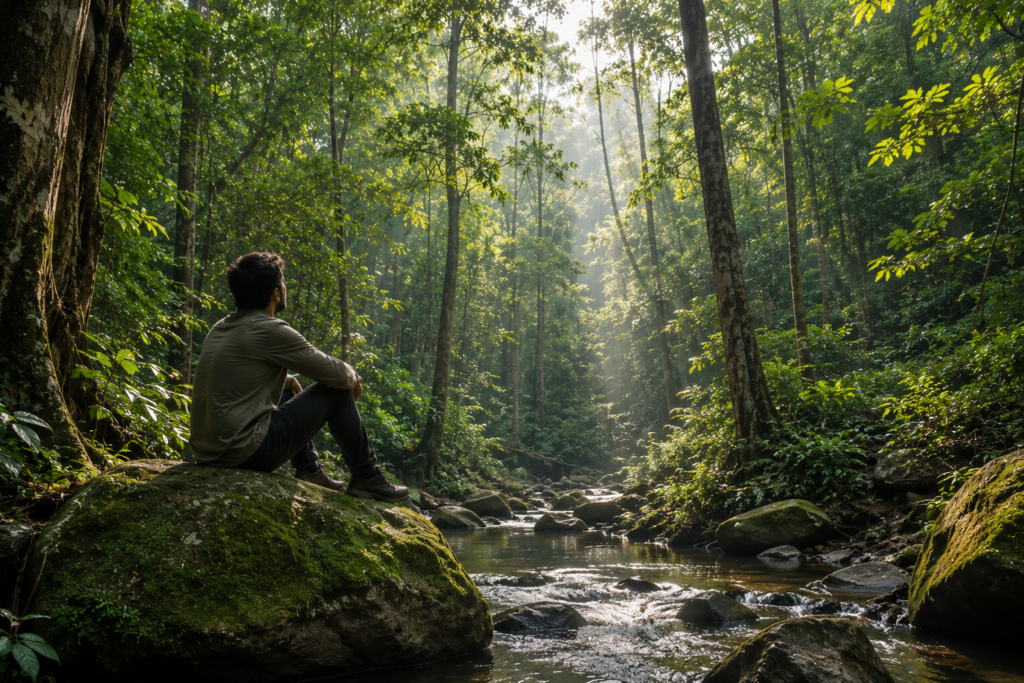
The concept of biophilia, introduced by Edward O. Wilson, proposes that human beings possess an innate attraction toward life and living systems. Human evolution took place within forests, rivers, mountains, grasslands, and biodiverse ecosystems over thousands of years. Consequently, the human brain and nervous system remain deeply adapted to natural environments.
Biophilia suggests that humans instinctively respond positively to elements such as:
- Trees and vegetation
- Flowing water
- Natural light
- Organic forms and textures
- Biodiversity
- Seasonal rhythms
- Open landscapes and ecological complexity
Natural environments provide sensory experiences fundamentally different from industrial urban settings. They create feelings of calmness, safety, curiosity, and restoration.
Biophilia, therefore, challenges the assumption that nature is merely decorative or recreational. Instead, it argues that contact with living systems is psychologically necessary for human flourishing.
Psychological Effects of Nature Disconnection
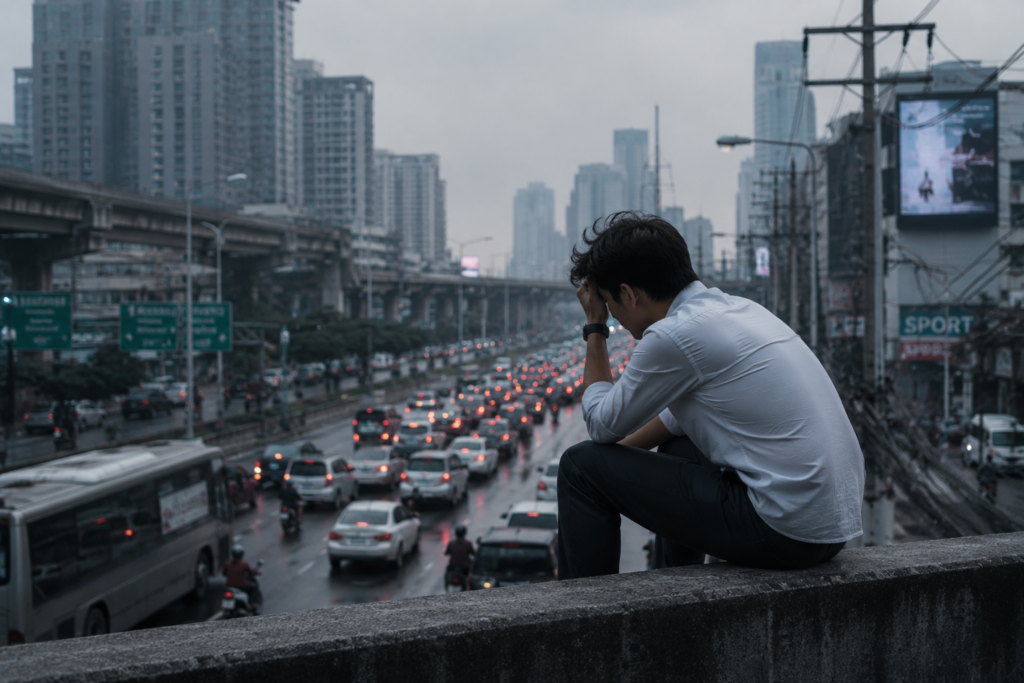
Environmental psychology increasingly demonstrates that disconnection from nature negatively affects mental health. Urban environments expose individuals to continuous cognitive stimulation through traffic, advertisements, digital devices, noise, and overcrowding. Over time, this contributes to stress, attention fatigue, emotional burnout, and anxiety.
One important framework explaining these effects is Attention Restoration Theory, developed by Rachel Kaplan and Stephen Kaplan. According to this theory, urban environments require constant directed attention, exhausting cognitive resources. Natural environments, however, engage attention gently and allow mental recovery.
Similarly, Roger Ulrich demonstrated through Stress Reduction Theory that exposure to natural settings reduces physiological stress responses. Contact with greenery, water, and biodiversity helps regulate the nervous system and improve emotional balance.
Research in environmental psychology has associated exposure to natural environments with:
- Reduced cortisol and stress levels
- Improved concentration and memory
- Enhanced creativity
- Better emotional regulation
- Reduced symptoms of anxiety and depression
- Improved social interaction and empathy
Modern cities often fail to provide these restorative experiences consistently, contributing to widespread psychological strain.
Biophilic Architecture and Human Well-being
Biophilic architecture seeks to reintegrate nature into the built environment. Unlike conventional architecture, which frequently treats nature as decorative landscaping, biophilic design recognizes ecological connection as a human psychological need.
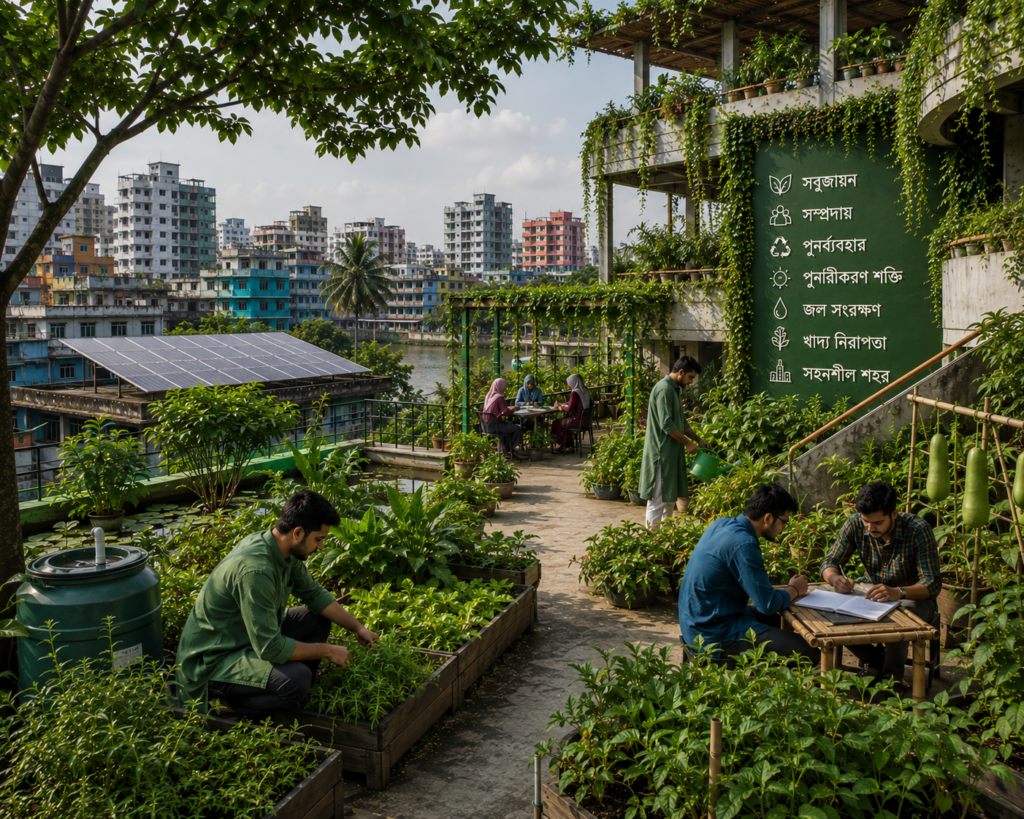
Biophilic architecture incorporates elements such as:
- Natural lighting and ventilation
- Indoor plants and living walls
- Rooftop gardens
- Courtyard spaces
- Water features
- Organic building materials
- Visual access to green spaces
- Natural airflow and temperature regulation
These features improve not only environmental performance but also human emotional experience. Access to daylight helps regulate circadian rhythms and mood. Vegetation improves indoor air quality and creates calming sensory environments. Natural materials such as wood, stone, and bamboo generate warmth and psychological comfort compared to sterile industrial surfaces.
Biophilic spaces also encourage slower and more mindful interaction with the environment. Instead of isolating humans from ecological processes, they create opportunities for observation, reflection, and sensory engagement.
Permaculture as an Urban Design Framework
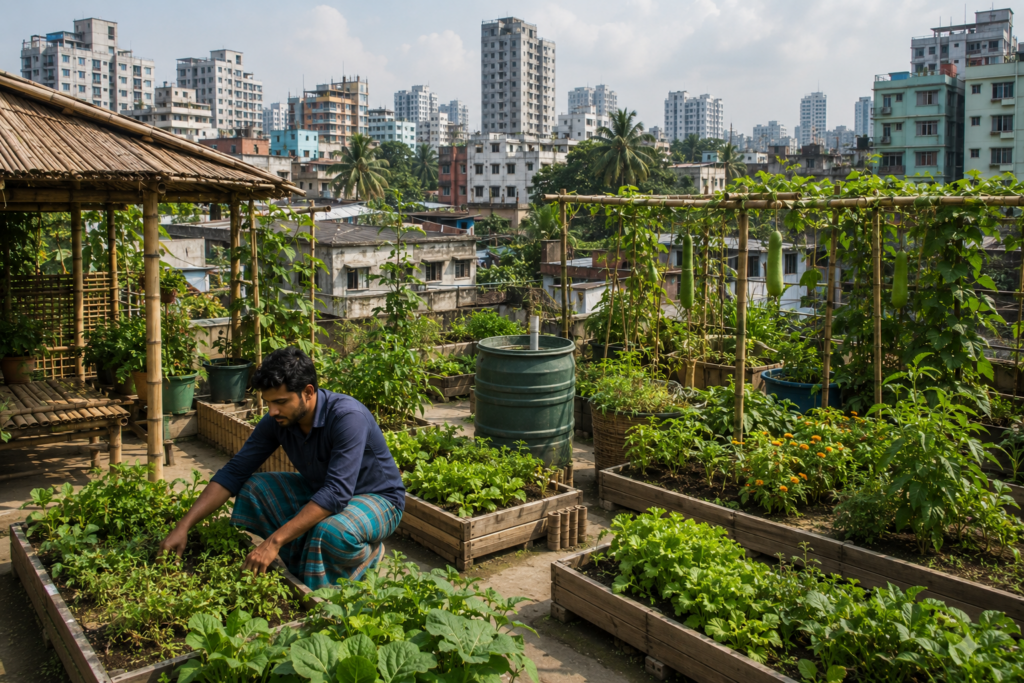
Permaculture, developed by Bill Mollison and David Holmgren, provides a broader ecological framework for redesigning urban systems.
Permaculture is based on three ethics:
- Earth Care
- People Care
- Fair Share
Rather than focusing solely on buildings, permaculture examines relationships between food systems, water cycles, waste management, biodiversity, energy use, transportation, and community life.
In urban contexts, permaculture encourages:
- Rooftop food production
- Community gardens
- Edible landscapes
- Rainwater harvesting
- Composting systems
- Urban biodiversity corridors
- Mixed-use neighborhoods
- Localized food and energy systems
Permaculture views cities not as isolated human systems but as ecological systems embedded within larger natural processes.
Urban Permaculture and Psychological Resilience
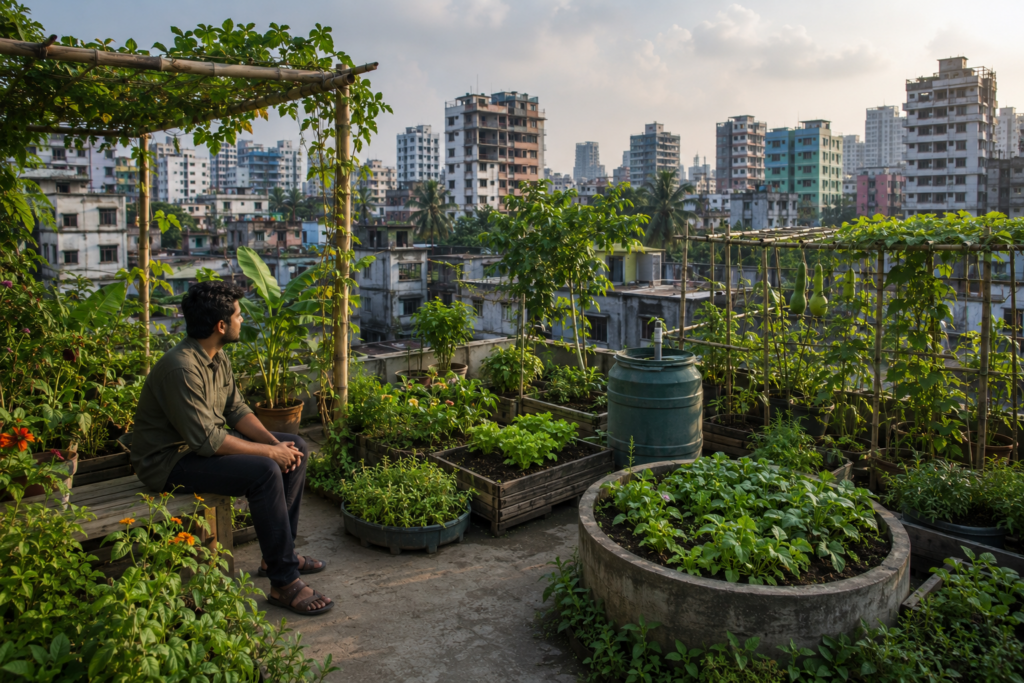
Urban permaculture contributes to psychological well-being by restoring ecological participation. Modern urban life often reduces individuals to passive consumers disconnected from the sources of food, water, energy, and waste cycles. Permaculture reintroduces active participation through gardening, composting, planting, food production, and cooperative community systems.
These activities provide psychological benefits beyond environmental sustainability. Gardening and interaction with living systems have been associated with:
- Reduced anxiety and depression
- Increased emotional grounding
- Improved social connection
- Greater sense of purpose and belonging
- Enhanced resilience during stress
Community gardens and ecological public spaces also strengthen neighborhood relationships and reduce social isolation. In many cities, urban farming projects have become spaces for therapy, education, cultural exchange, and collective healing.
Permaculture, therefore, expands architecture beyond aesthetics and functionality. It reconnects urban residents with ecological rhythms and restores a sense of interdependence often absent from industrial urban life.
The Future of Regenerative Cities
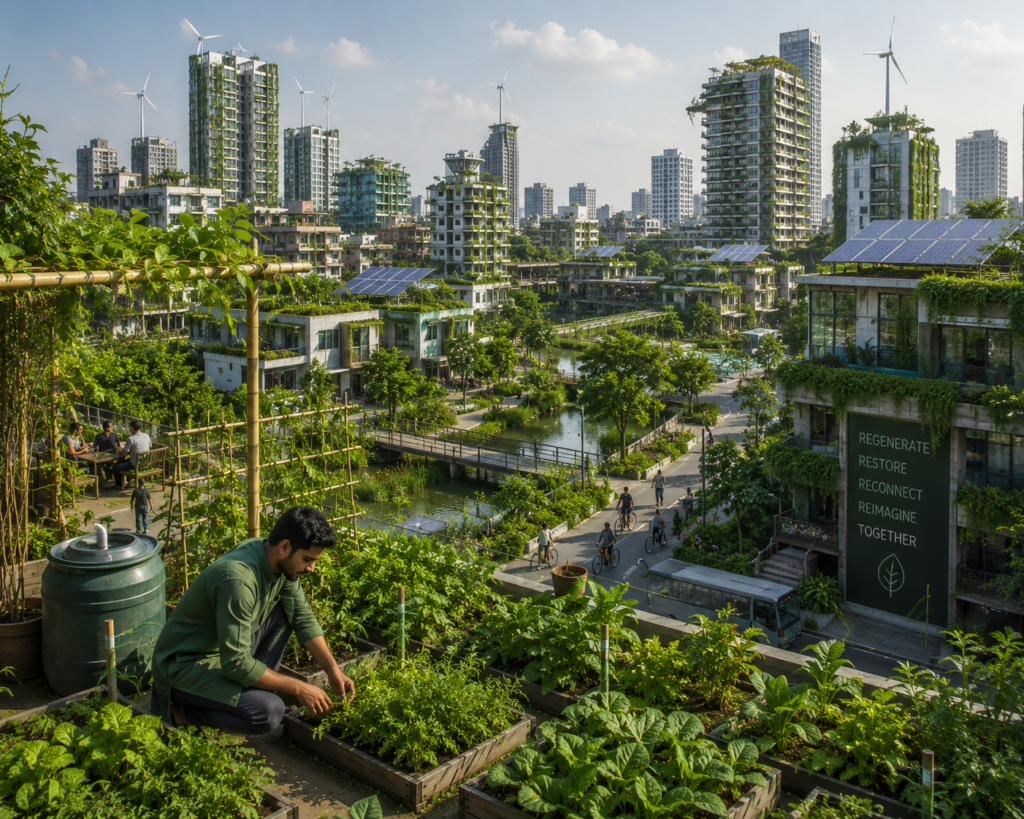
The environmental and psychological crises facing modern cities require more than technological solutions. Climate change, biodiversity collapse, mental health disorders, pollution, and social fragmentation reveal the limitations of purely industrial urban models.
Future cities may increasingly adopt regenerative principles that integrate ecology, psychology, and community. Such cities would prioritize:
- Walkability and human-scale design
- Green infrastructure
- Urban biodiversity
- Food-producing landscapes
- Renewable energy systems
- Water-sensitive urban planning
- Community-centered public spaces
- Ecological resilience
Rather than functioning as machines of extraction and consumption, regenerative cities would operate more like ecosystems—diverse, adaptive, interconnected, and life-supporting.
This transformation requires a shift in architectural philosophy. Buildings must no longer be viewed as isolated objects but as components of larger living systems influencing both ecological and psychological health.
Conclusion
Urban architecture shapes far more than skylines and infrastructure; it shapes human emotional experience, behavior, and ecological relationships. Modern cities have achieved extraordinary technological and economic progress, yet they have often done so at the cost of psychological well-being and ecological balance.
Biophilia reminds us that human beings remain deeply connected to nature at a biological and emotional level. Permaculture extends this understanding into a practical design philosophy capable of transforming urban systems into regenerative and resilient environments.
Together, biophilia and permaculture offer a new vision for the future of cities—one in which architecture supports not only efficiency and growth, but also biodiversity, mental health, ecological participation, and meaningful human connection.
The city of the future may therefore not resemble an industrial machine dominated by concrete and consumption. Instead, it may evolve into a living ecosystem where architecture, ecology, and psychology exist in balance.
References
- Edward O. Wilson. (1984). Biophilia. Harvard University Press.
- Stephen Kellert, Heerwagen, J., & Mador, M. (2008). Biophilic Design: The Theory, Science and Practice of Bringing Buildings to Life. Wiley.
- Bill Mollison. (1988). Permaculture: A Designer’s Manual. Tagari Publications.
- David Holmgren. (2002). Permaculture: Principles and Pathways Beyond Sustainability. Holmgren Design Services.
- Hemenway, T. (2015). The Permaculture City: Regenerative Design for Urban, Suburban, and Town Resilience. Chelsea Green Publishing.
- Rachel Kaplan & Stephen Kaplan. (1989). The Experience of Nature: A Psychological Perspective. Cambridge University Press.
- Roger Ulrich. (1984). “View Through a Window May Influence Recovery from Surgery.” Science, 224(4647), 420–421.
- Beatley, T. (2011). Biophilic Cities: Integrating Nature into Urban Design and Planning. Island Press.
- Newman, P., & Jennings, I. (2008). Cities as Sustainable Ecosystems: Principles and Practices. Island Press.
- Gehl, J. (2010). Cities for People. Island Press.
- Register, R. (2006). Ecocities: Rebuilding Cities in Balance with Nature. New Society Publishers.