
Written by: Tasnim Tarannum (Lecturer, North South University)
While the contemporary industrial civilization is advancing robustly, modern organizations are constantly glorifying urgency and speed as core office customs. By routinely focusing on digital transformation, agile work practices, and objective-based performance mechanisms, employees are being pressured to do more. They juggle a variety of their everyday tasks and tick off daily checklist goals. As they continuously try to keep up with rapid changes in the workplace and sacrifice their work-life balance, emotional well-being, and physical rest, this creates a myriad of adverse effects.

Mindy Shoss, PhD, associate editor of the Journal of Occupational Health Psychology and professor of psychology at the University of Central Florida, identifies that substantial workload, lack of recognition or rewards for one’s efforts, low levels of support and toxic work environments, along with constant fear of job insecurity, can cause profound fatigue among workers (American Psychological Association, 2023). As a result, organizations suffer from absenteeism, high turnover, reduced profitability, and reduced work efficiency in the long run. Workers become exhausted, psychologically distressed, and surfeited, resulting in numerous physical and psychosocial debacles. They drown themselves in the philosophy of “faster is better” rather than achieving something impactful.
But if we observe nature, we can see it is flourishing patiently over time. That’s one of the major differences between humans and natural ecosystems, where nature can become one of the best teachers for inculcating connection, resilience and harmony. Every living being depends on meaningful connections, complementing one another and operating within a synchronized system that sustains life over millions of years.
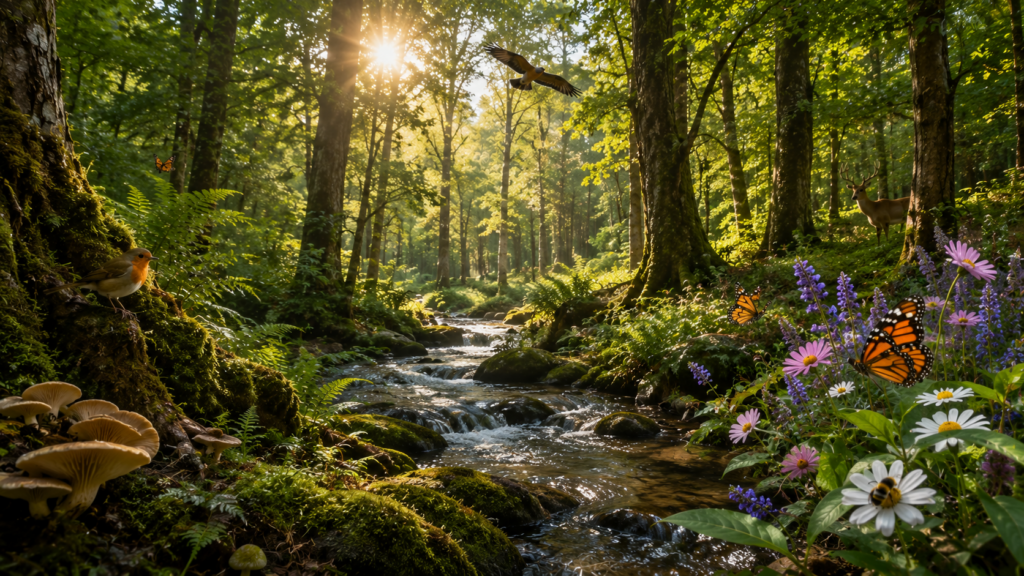
Trust and cooperation are at the heart of every living system. Trees, water, air, soil, and insects all depend on each other for sustenance. Food chains can be perfect examples of such interdependence. Moreover, the symbiotic relationship can be observed between plenty of animals, such as the clownfish with the sea anemones. The fish provides nutrients to the anemones, and it gets a safe place to hide from predators. Similarly, bees pollinate the flowers for reproduction while collecting nectar from the plants. There are also various other examples of such mutual relationships among living organisms. Whenever any animal or plant fails to cooperate and gets isolated, it can be easily harmed and become prey. In the same way, organizations must focus on fostering collaboration in the workplace. Leaders can encourage employee participation across teams, departments, and regions. This will motivate the employees by championing competition, innovation, and productivity. As natural ecosystems survive through relationships, not isolation, organizations can also survive when their people feel belongingness and connectivity with their employer.
While the hustle culture of the twenty-first century celebrates quick success, failures can be viewed as equally disappointing. Yet, resilience can only be built when one knows how to overcome defeat and embrace long-term growth. It can be learned from nature that after any major catastrophes like floods, fires, or fabricated disasters such as logging, pollution, or deforestation, the ecosystem restores itself gradually. The hardy, tough pioneer species (such as grasses, weeds) come up at first, creating a favorable environment for the next species. Gradually, the next species (shrubs, bushes) takes up the succession to make space for the subsequent plants and animals. Organizations that invest more in training and nurturing their employees can become excellent mentors to their young, fresh, and talented coworkers. Encouraging open communication helps them to better collaborate and promotes psychological safety as employees feel heard and take calculated risks without fear of reprisal. Furthermore, mental health support and wellness sessions, like free yoga, gym, or counselling, can better enable one to focus on work and overcome major life events. In addition, flexible working arrangements and family-friendly benefits like childcare facilities provide greater autonomy to support better work-life balance. A report by the Chartered Institute of Personnel and Development states that flexible working options enhance job satisfaction, motivation, openness, and efficiency by actively controlling stress, anxiety, and burnout. Therefore, workplaces that promote learning, reflection, communication, and flexibility make employees more adaptable over time.

Our planet Earth consists of a vibrant network of 8.7 million species (Greenpeace, 2024). This not only creates a complex structure of interdependent organisms which enhances diversity, but also revives balance. Such biodiversity is essential for natural resilience, climate control, food security, and medical discoveries. It enables nature to endure diseases, pests, and extreme weather. Some places have more biodiversity, such as the tropics and temperate regions, compared to the Arctic. Plants and animals all help each other by sharing resources, controlling population, and therefore regulating the whole ecosystem. Ecological functions, for example, water purification, pollination, and nutrient cycling, all resemble continuous harmony and coordination among various systems (Gholami, 2024). The period of rest and renewal can also be observed in nature. Changes in season, such as the blooming of flowers in spring after a long, harsh winter, resonate with the absence of constant output and the significance of rest and revival. As human beings ignore this rhythm in work, lethargy, burnout, and several aftermaths become inevitable.
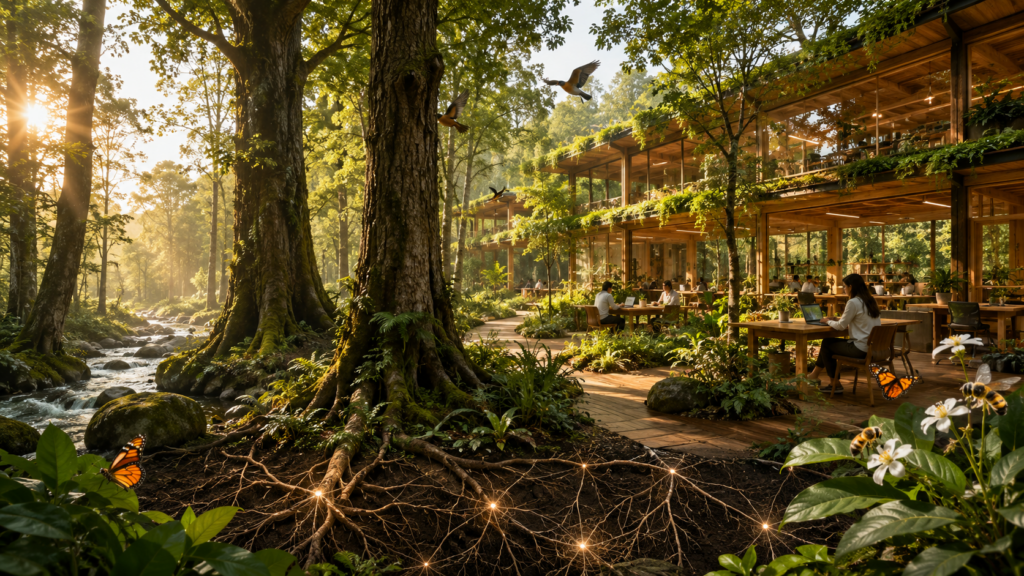
It is therefore crucial that organizational leaders step up to nurture the workplace as an intricate ecosystem where all employees have an equally important part to play. They can act more as a caregiver rather than a controller to restore connection, enthusiasm, and balance. Just as forests shine through patience, dependence, and diversity under favorable climate, likewise, human systems can also prosper through right support, partnership, and wellbeing to yield abundance under appropriate leadership.
References
American Psychological Association. (2023). Employers need to focus on workplace burnout: Here’s why. https://www.apa.org/topics/healthy-workplaces/workplace-burnout
Greenpeace. (2024). What is biodiversity and why is it important? Greenpeace. https://www.greenpeace.org/mena/en/what-is-biodiversity-and-why-is-it-important/
Gholami, A. (2024). Biodiversity and Ecological Balance: Nature’s Harmony. Protect Earth Foundation. https://protectearth.foundation/biodiversity-and-ecological-balance/
Chartered Institute of Personnel and Development. (n.d.). Benefits of flexible working for employees. CIPD | The Professional Body for HR & People Development. https://www.cipd.org/globalassets/media/misc-hero-images/flex-from-first-benefits-to-employees_tcm18-90030.pdf